


Welcome back to Codes of Culture. I’m Ashumi Sanghvi.
The Phia cookie controversy isn’t ending with competitors like Kate Sanner, founder of resale platform Beni, finally breaking her silence on Phoebe Gates and Sophia Kianni’s start up on her substack.
In other Gates news, on a more positive note, Bill Gates, through his climate fund Breakthrough Energy Ventures, a primary investor in Heart Aerospace, a pioneering electric aviation company building the regional hybrid-electric airplane known as the ES-30. We cover news about its first flight in this issue and one i am personally excited to keep track of.
Finally, as we are building through the programming for our 4th annual Future+ summit in November, one of the key themes we will keep revisiting will be the human attention economy. This week a feature on follower count losing its footing as a measure of creator influence takes precedent.
Scroll on and subscribe for more.
If you are new here, or want to catch up on the best of Codes of Culture, we’d recommend you start here and remember to subscribe for full access to our news, insights, podcast and global events.
📖In this issue:
Heart Aerospace has flown the world’s largest electric aircraft.
Follower count is losing its power as the defining measure of creator influence.
Neko Health is bringing its high-tech body scans to New York.
Higgsfield has reached a $5.4 billion valuation as demand for AI content surges.
Women’s soccer is becoming fashion’s next major opportunity.
1. AVIATION AND THE FUTURE OF TRAVEL
Heart Aerospace has flown the world’s largest electric aircraft.

What’s happening: Heart Aerospace has successfully completed the first flight of X1, its full-scale electric aircraft demonstrator and, at more than 25,000 pounds with a 106-foot wingspan, the largest battery-electric aircraft ever flown. The 27-minute test flight took place in Plattsburgh, New York, with the aircraft reaching 1,100 feet and generating more than one megawatt of electric power. X1 is designed to validate technology for Heart’s upcoming 30-seat ES-30 hybrid-electric regional aircraft, which has attracted commitments from airlines including United and Air Canada and is targeting entry into service in 2031.
TLDR:
The X1 is the largest battery-electric aircraft ever to fly.
Its first 27-minute flight used approximately $5 worth of electricity.
Heart is using the demonstrator to develop its 30-seat ES-30 regional aircraft.
The company says the ES-30 could reduce operating costs by more than 40% versus legacy regional aircraft.
Why it matters: Electric aviation has often felt like a distant sustainability promise, but Heart’s milestone begins to make the economics much more tangible. If electrification can materially lower energy, maintenance and operating costs, its impact could go beyond reducing emissions and reshape where and how frequently people fly, potentially making smaller regional routes commercially viable again.
2. CREATORS, INFLUENCE AND PERFORMANCE
Follower count is losing its power as the defining measure of creator influence.

What’s happening: Fashion brands are getting better at measuring what creators actually deliver, and that is changing who gets hired. Rather than treating follower count as the primary proxy for influence, brands increasingly have access to data around engagement, conversions and audience quality, allowing them to distinguish creators who generate genuine consumer action from those who simply command large audiences. The result is a creator ecosystem where performance and relevance are becoming increasingly important alongside reach.
TLDR:
Bigger audiences no longer automatically mean greater value for brands.
Engagement, conversions and audience quality are becoming more important metrics.
Technology is making creator-driven sales significantly easier to track.
Brands increasingly need diversified creator networks rather than simply a handful of large influencers.
Why it matters: Influencer marketing is entering a much more mature phase. The first era rewarded scale; the next will reward the ability to move specific communities and produce measurable outcomes. That benefits creators with high-trust, highly relevant audiences while forcing brands to think about influence as a portfolio rather than a popularity contest.
3. HEALTH, LONGEVITY AND PREMIUM EXPERIENCES
Neko Health is bringing its high-tech body scans to New York.

What’s happening: Neko Health, the preventative health startup founded by Spotify co-founder Daniel Ek and Hjalmar Nilsonne, is opening its first US location in SoHo, New York, on September 24. The company combines proprietary full-body scanning technology with blood testing and data from fitness devices to provide a broad assessment of a customer’s health. Neko already operates in the UK and Sweden, says more than 100,000 people have undergone scans and has attracted more than 25,000 people to its New York waitlist following a $700 million Series C raise last month.
TLDR:
Neko Health opens its first US location in SoHo on September 24.
More than 25,000 New Yorkers have reportedly joined the waitlist.
The service combines body imaging, bloodwork and wearable data.
Neko raised a $700 million Series C ahead of its US expansion.
Why it matters: Longevity is increasingly becoming a consumer category rather than simply a healthcare category. Companies like Neko are packaging complex diagnostics into experiences that feel closer to premium wellness, hospitality and technology than the traditional doctor’s office, and locating its first US site in the middle of SoHo’s luxury retail ecosystem is indicative of that shift. As consumers become willing to spend on understanding and optimising themselves, the broader opportunity sits in turning previously specialist technology into accessible, beautifully designed products.
4. AI, MEDIA AND THE NEW CREATIVE INFRASTRUCTURE
Higgsfield has reached a $5.4 billion valuation as demand for AI content surges.
What’s happening: AI content platform Higgsfield has raised $400 million in a Series B led by DST Capital taking its valuation to $5.4 billion, roughly four times its valuation six months ago. The company, whose tools are used by creators, marketers and studios to generate images, video and storyboards, says annualised revenue has reached $700 million while its global user base has doubled since January to more than 30 million. The funding will support international expansion, infrastructure, research and hiring as enterprise demand for AI-generated advertising and entertainment content continues to accelerate.
TLDR:
Higgsfield has raised $400 million at a $5.4 billion valuation.
Its valuation has increased roughly fourfold in six months.
Annualised revenue has reached $700 million.
The platform now has more than 30 million users globally.
Why it matters: Generative AI is rapidly moving from experimentation into production infrastructure. A $5.4 billion valuation matters less on its own than the speed at which creators, agencies, marketers and entertainment companies appear to be incorporating these tools into existing workflows. The companies that win may therefore not simply build the most impressive models, but the platforms that become embedded in the commercial production of culture.
5. WOMEN’S SPORT, FASHION AND CULTURAL CAPITAL
Women’s soccer is becoming fashion’s next major opportunity.
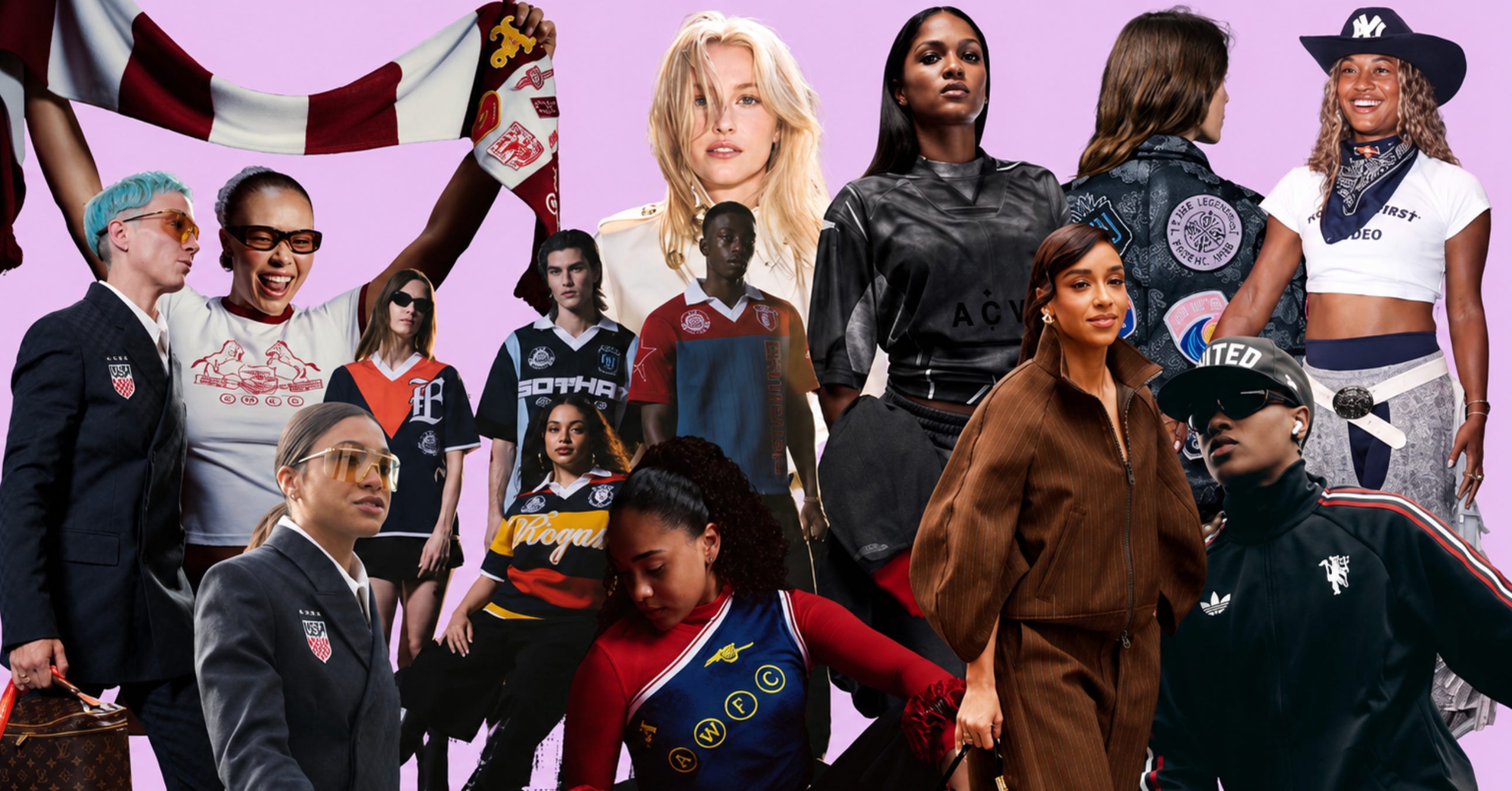
What’s happening: Ahead of the 2027 Women’s World Cup, Hypebae argues that women’s soccer remains significantly underdeveloped as a fashion platform. Men’s football has increasingly built relationships with fashion and luxury brands, yet the women’s game has not experienced the same volume of high-profile fashion moments. With audiences, athlete profiles and commercial interest continuing to expand, that gap is beginning to look less like a niche opportunity and more like an obvious piece of whitespace for fashion brands.
TLDR:
Fashion’s relationship with football has accelerated dramatically.
Women’s soccer has yet to receive the same level of luxury and designer attention as the men’s game.
The 2027 Women’s World Cup offers brands a major global cultural moment.
The opportunity extends beyond sponsorship into athlete style, collaborations, storytelling and lifestyle product.
Why it matters: Women’s football is becoming one of the clearest intersections of sport, culture and commerce, but many brands are still approaching it primarily through conventional sponsorship. Fashion has the opportunity to go further by helping create the visual language, personalities and cultural moments surrounding the sport. The brands that build authentic relationships with players and communities before the next World Cup cycle peaks could benefit from something far more valuable than logo exposure: a meaningful position inside one of the fastest-evolving cultural ecosystems in sport.
Who is demanding AI content pls 😭