


Welcome back to Codes of Culture and to all our new subscribers. I’m Ashumi Sanghvi. We hope you are having a beautiful, sun-filled summer.
After a brief quiet period, we are back in your inbox and with a lot of news to share. We had an incredible week at Cannes Lions working with the likes of Steven Bartlett, Maggie Sellers Reum, Joby Aviation, a16z CLF, Epidemic Sound and more. A lot of the work we do at Future+ is centred on building proximity for brands, founders and investors to the highest-value opportunities. You can find our recap here.
Some of the themes we have been quietly building into and shaping for what we are working on next include closing the distance between top creators and CMOs. The brand budget conversation is moving away from media plans and toward direct relationships, which requires rooms designed for both sides to actually talk.
The top creators have their own mini media empires and are worth millions. They are no longer just talent; they’re LPs. They want in on frontier tech first funds, consumer and creator economy funds, and the investors, athletes and celebrities around them are chasing the same access. Building the infrastructure that connects that capital to the right opportunities, and the right people to each other, is where we have been putting real energy this year.
Finally, we have been building our global network for over two decades, drawing on cumulative experience and real relationships that have compounded over time. As the connective layer for all things creators, consumer, and capital, our ongoing relationship between luxury, culture and technology will culminate in our annual Codes of Culture summit in London this November.
If you are new here, or want to catch up on the best of Codes of Culture, we’d recommend you start here and remember to subscribe for full access to our news, insights, podcast and global events.
📖In this issue:
OpenAI’s merch line turns an AI company into a lifestyle brand.
Forbes’ next billion-dollar companies list.
Netflix pays over $500 million for Ben Affleck’s AI filmmaking startup.
Jay Shetty is turning a $100 million podcast deal into a conscious empire.
Daydream brings conversational fashion search onto brand websites.
1. TECHNOLOGY, IDENTITY AND BRAND CULTURE
OpenAI’s merch line turns an AI company into a lifestyle brand.

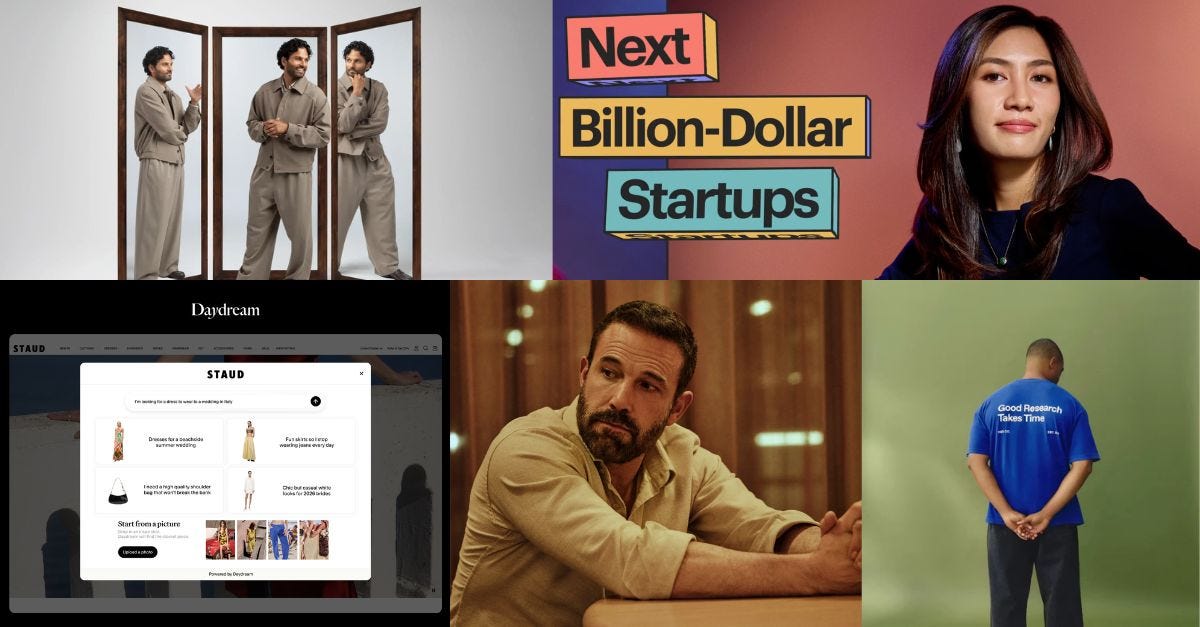
What’s happening: OpenAI has expanded Supply Co., originally an internal merchandise destination for employees, into a wider-facing apparel and accessories line featuring a “Research” quarter-zip, “Good Research Takes Time” T-shirts, branded socks and a ChatGPT basketball, which has already sold out. The visual language draws on collegiate sportswear, restrained branding and the elevated corporate-merchandise aesthetic that has become familiar across technology, hospitality and fashion.
TLDR:
Supply Co. has moved from internal employee merchandise into a public expression of the OpenAI brand.
The collection translates technical language such as “Research” and “Good Research Takes Time” into wearable identity markers.
The sold-out ChatGPT basketball indicates demand for physical products attached to an otherwise digital company.
The aesthetic follows a familiar lifestyle playbook built around nostalgic sportswear and understated branding.
OpenAI is creating ways for users and supporters to engage with the brand beyond the product interface.
Why it matters: Merchandise is becoming part of the identity infrastructure around AI companies. The physical products may be commercially secondary, but they turn affiliation with a technology platform into a visible cultural signal and give OpenAI a presence beyond ChatGPT. As AI companies compete for public trust, talent and attention, brand expression becomes a strategic capability rather than a decorative layer.
2. VENTURE CAPITAL AND THE NEXT UNICORN PIPELINE
Forbes’ next billion-dollar companies list.
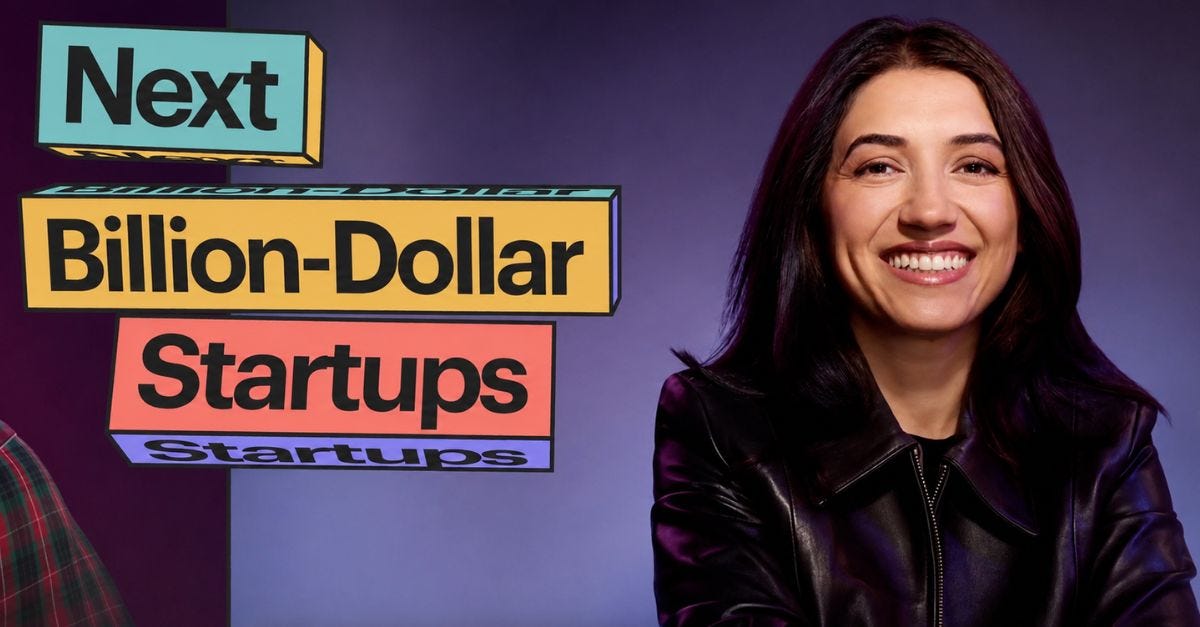
What’s happening: Forbes published its 2026 Next Billion-Dollar Startups list, an annual selection of 25 venture-backed US companies considered most likely to reach a valuation of at least $1 billion and sustain growth beyond that milestone. The list evaluates companies based on metrics including revenue, growth, valuation, addressable market, and business model strength. While AI remains a dominant force across the venture market, the companies attracting the greatest attention are increasingly those applying the technology to specific operational, commercial and sector-level problems rather than building undifferentiated general-purpose tools.
TLDR:
Forbes selected 25 venture-backed companies positioned to cross the $1 billion valuation threshold.
The list focuses on privately held US startups that have not yet reached unicorn status.
Revenue trajectory, growth, market size, and business model durability remain central to the selection process.
AI is increasingly embedded across startup categories rather than operating as a standalone investment thesis.
The strongest emerging companies combine differentiated technology with a clearly defined customer or workflow.
Why it matters: The list provides a useful indicator of where investors expect value to accumulate next. The current cycle is moving towards applied infrastructure: businesses that embed themselves into healthcare, finance, enterprise operations, commerce and other high-value workflows. Access to powerful models is becoming more widely available, while proprietary distribution, customer data, workflow integration and sector expertise remain harder to replicate. This is why strategic buyers are increasingly choosing to acquire entire AI capabilities rather than licensing them from outside providers.
3. ENTERTAINMENT, PRODUCTION AND AI INFRASTRUCTURE
Netflix pays over $500 million for Ben Affleck’s AI filmmaking startup.
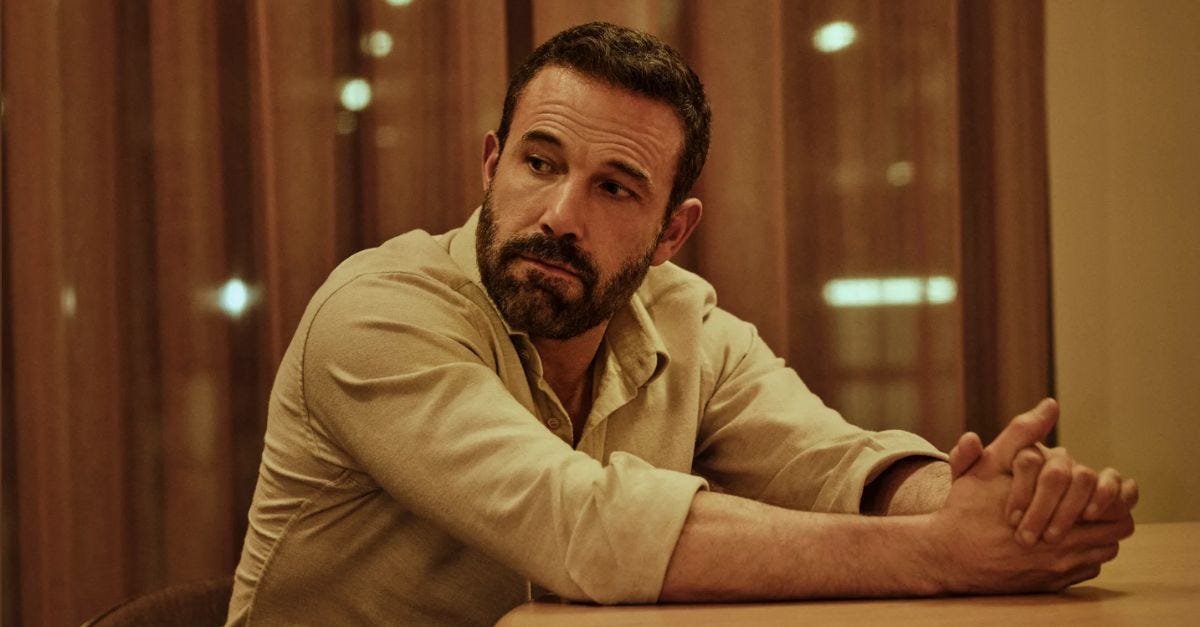
What’s happening: InterPositive, the AI filmmaking startup co-founded by Ben Affleck, develops AI tools for post-production, particularly to solve production problems such as missing shots, unsuitable backgrounds, and incorrect lighting. InterPositive’s team has joined Netflix, while Affleck has taken on a senior advisory role. Netflix has also said that approximately 300 of its titles have already used generative AI, showing that the acquisition is not an isolated experiment but part of a wider effort to build AI directly into the company’s production system.
TLDR:
Netflix paid $587 million in cash for InterPositive.
The technology focuses on post-production issues including missing footage, background replacement and lighting correction.
InterPositive’s full team has joined Netflix, while Ben Affleck will advise the company.
Around 300 Netflix titles have already incorporated generative AI.
Netflix is bringing AI production capability in-house rather than relying entirely on external software providers.
Why it matters: The acquisition signals that AI production infrastructure is becoming a strategic asset for media companies. Netflix’s advantage has historically come from distribution, subscriber data and global commissioning at scale; owning the tools used to create and modify content adds another layer to that system. Yet the deal also underscores that technology alone is not enough: adoption in entertainment will depend on whether AI is positioned as extending creative control or diminishing creative labour.
4. CREATORS, MEDIA AND VERTICAL INTEGRATION
Jay Shetty is turning a $100 million podcast deal into a conscious empire.

What’s happening: Jay Shetty is expanding On Purpose from a successful podcast into a wider media, education and wellness business. Forbes reports that Shetty earned an estimated $21 million over the past 12 months, supported by a podcast agreement reportedly worth $100 million and a growing portfolio of ventures spanning content, live appearances, books, partnerships, coaching, and products centred on mindfulness, relationships, and personal development. Rather than treating the podcast as the final product, Shetty is using its reach, trust and recurring distribution to support a broader ecosystem built around conscious living.
TLDR:
Shetty reportedly earned an estimated $21 million over the past year.
His podcast agreement provides the financial and distribution base for a wider media and wellness platform.
On Purpose operates as the top of the funnel for books, events, partnerships, education and consumer propositions.
The business is organised around a consistent worldview rather than a single content format.
Shetty can move across media, experiences and products without rebuilding trust for every launch.
Why it matters: The creator economy is shifting from sponsorship-led monetisation to vertically integrated intellectual property businesses. The most valuable creators are building systems in which content creates audience, audience creates trust and trust supports a portfolio of products, services and experiences. Shetty’s model is particularly relevant because the underlying asset is not simply reach, but a coherent belief system that can be expressed across multiple formats. For brands, this means entering an established cultural and commercial ecosystem rather than purchasing access to an isolated audience. The same principle of owning the customer relationship is now shaping fashion commerce, as AI-powered discovery moves directly into brand-controlled environments.
5. FASHION COMMERCE AND CONVERSATIONAL DISCOVERY
Daydream brings conversational fashion search onto brand websites.
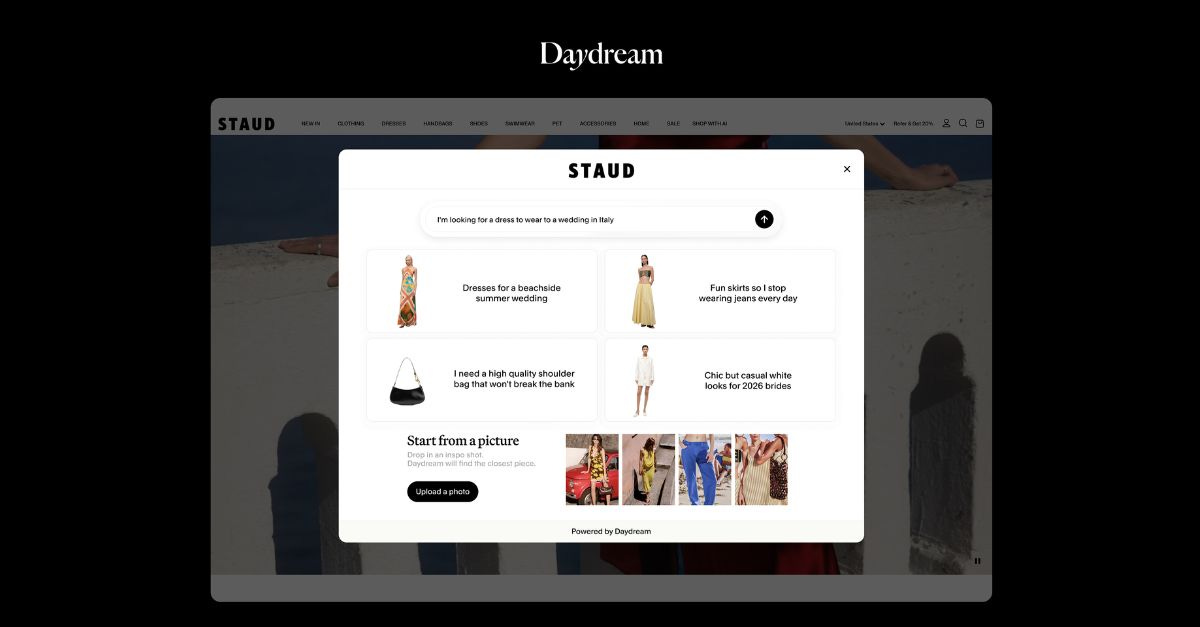
What’s happening: Daydream has launched an AI-powered search and discovery product for fashion brands and retailers, bringing its conversational shopping technology directly from its standalone consumer platform to partner websites. The solution allows shoppers to search using natural language, visual references and occasion-led requests rather than relying on conventional categories and filters. STAUD, Alice + Olivia, Cult Mia and more are participating in the initial pilot, while more than 25 additional brands and retailers, including Anine Bing, ba&sh, Sandro and Maje, have signed on. Daydream’s consumer platform has surpassed 1.5 million users, and the embedded product gives brands access to its discovery model while keeping customers within their owned digital environment.
TLDR:
Daydream is embedding natural-language fashion search directly into brand and retailer websites.
Shoppers can describe an occasion, aesthetic, reference or specific need instead of navigating static filters.
Five partners are live in the initial pilot, with more than 25 additional fashion businesses signed on.
The product brings Daydream’s AI discovery architecture into the retailer’s own customer journey.
Brands gain access to the language customers use when expressing intent, including the occasions and references behind a purchase.
Why it matters: Fashion search has traditionally forced the shopper to translate desire into catalogue language: category, colour, size, material and price. Conversational discovery reverses that process by allowing the customer to begin with. At the same time, the embedded model gives brands a way to introduce AI without surrendering the customer relationship to a third-party platform. The resulting data is also richer than conventional site search because it reveals why someone is shopping, which references shape their taste and what constraints are blocking the purchase.
Kind of telling that companies are not only infiltrating our physical and digital spaces but also our personal spaces w merch 😭